The electronics are the hard part, and you have already solved them. What is missing is the housing: the thing a customer picks up, and the thing a manufacturer can actually build. That is what I design.
01 — The work
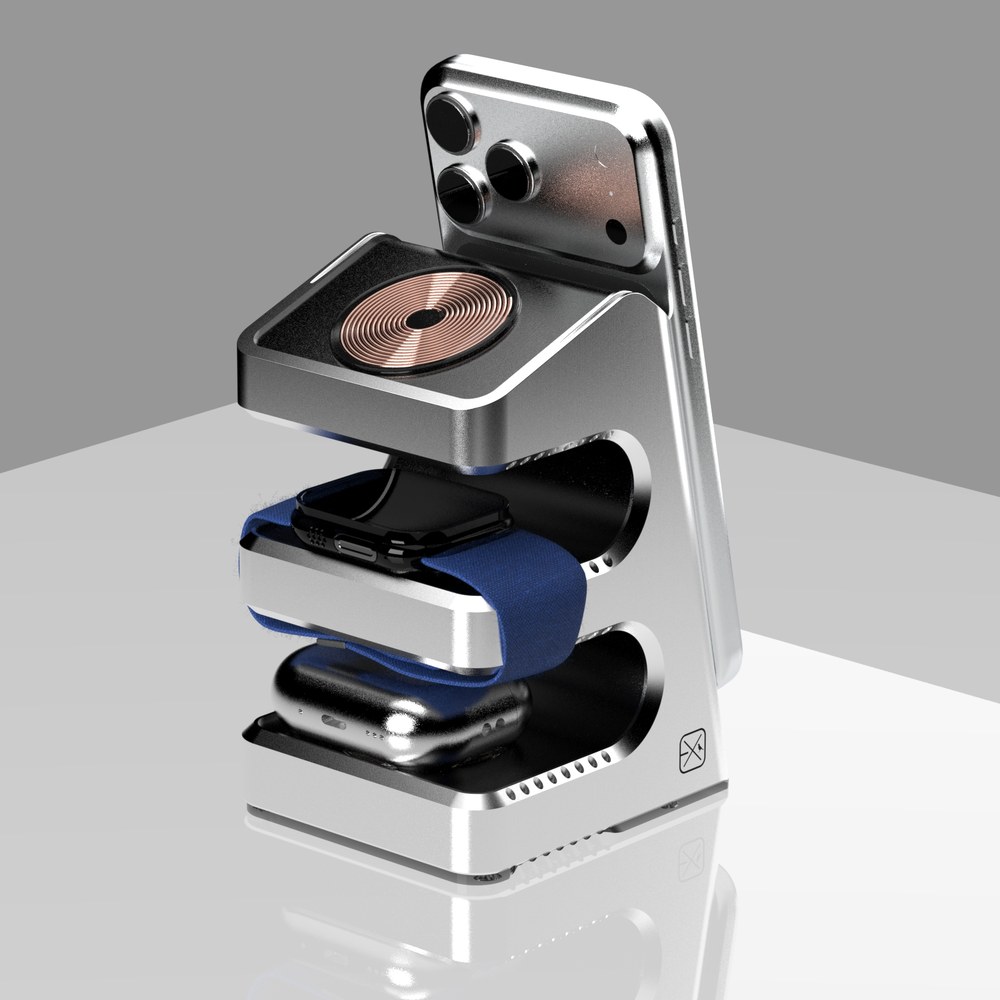
Focus Dock, a 3-in-1 wireless charging stand. Every decision below is one a prototype does not have to make and a product does.
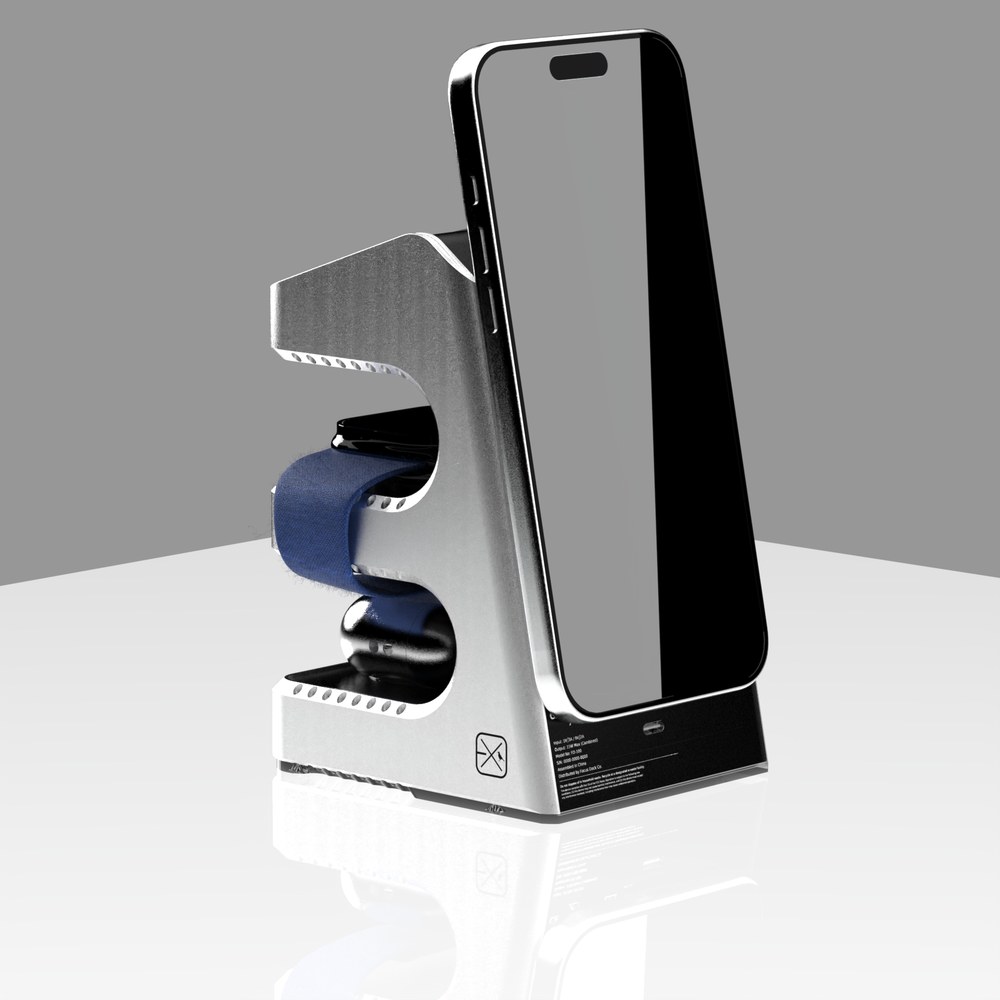
A second dock position that hides the phone screen instead of showing it. Wood-grain mold finish on the structural spine against matte black on every contact surface, so the material change tells you where to put things. Vent channels sized from measured heat rather than drawn for looks. None of it is necessary to make the thing work. All of it is what separates a product from a prototype that happens to function.
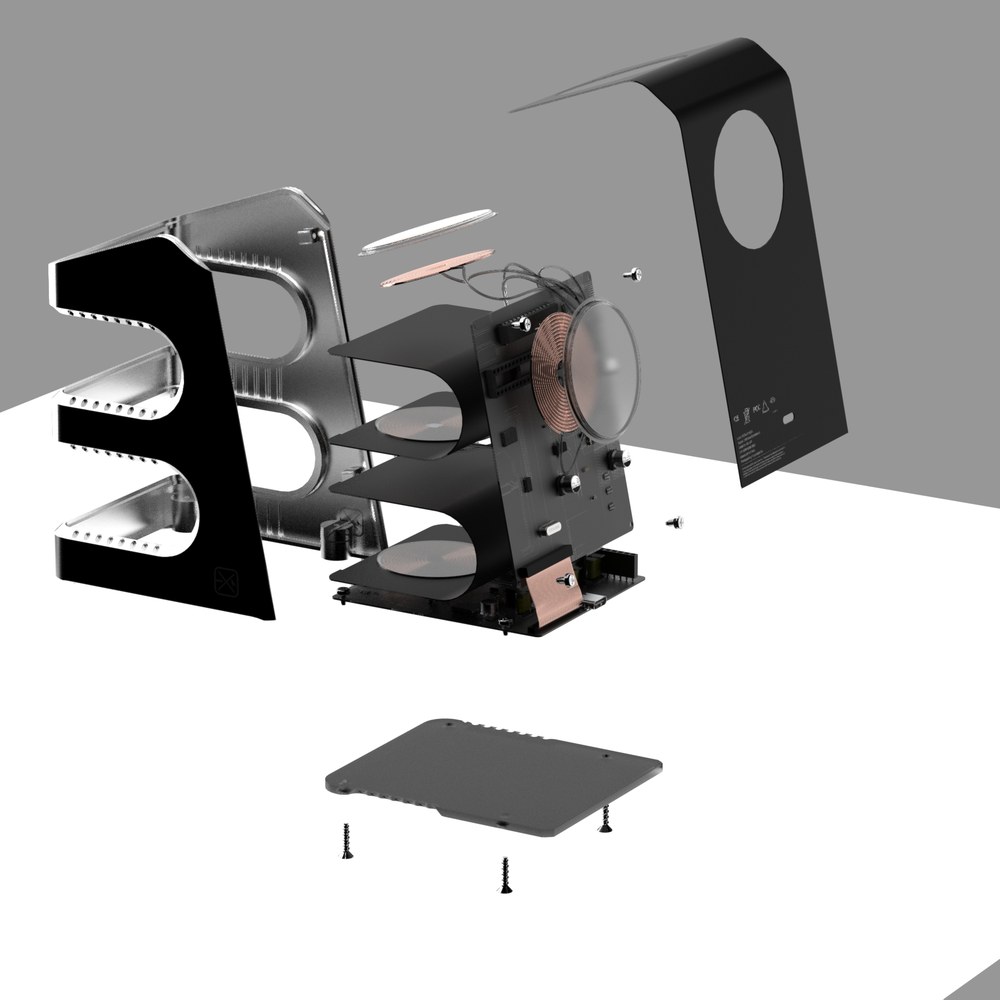
One structural body, thin surface covers per contact area, and coil sub-assemblies that install without disturbing the rest of the housing.
The USB-C input fouled the phone in the focus-mode position. Found during review, moved to the rear. Cheap to change on a model. Expensive once the mold is cut. Draft analysis then came back with zero undercut faces, so it releases from a standard two-plate tool.
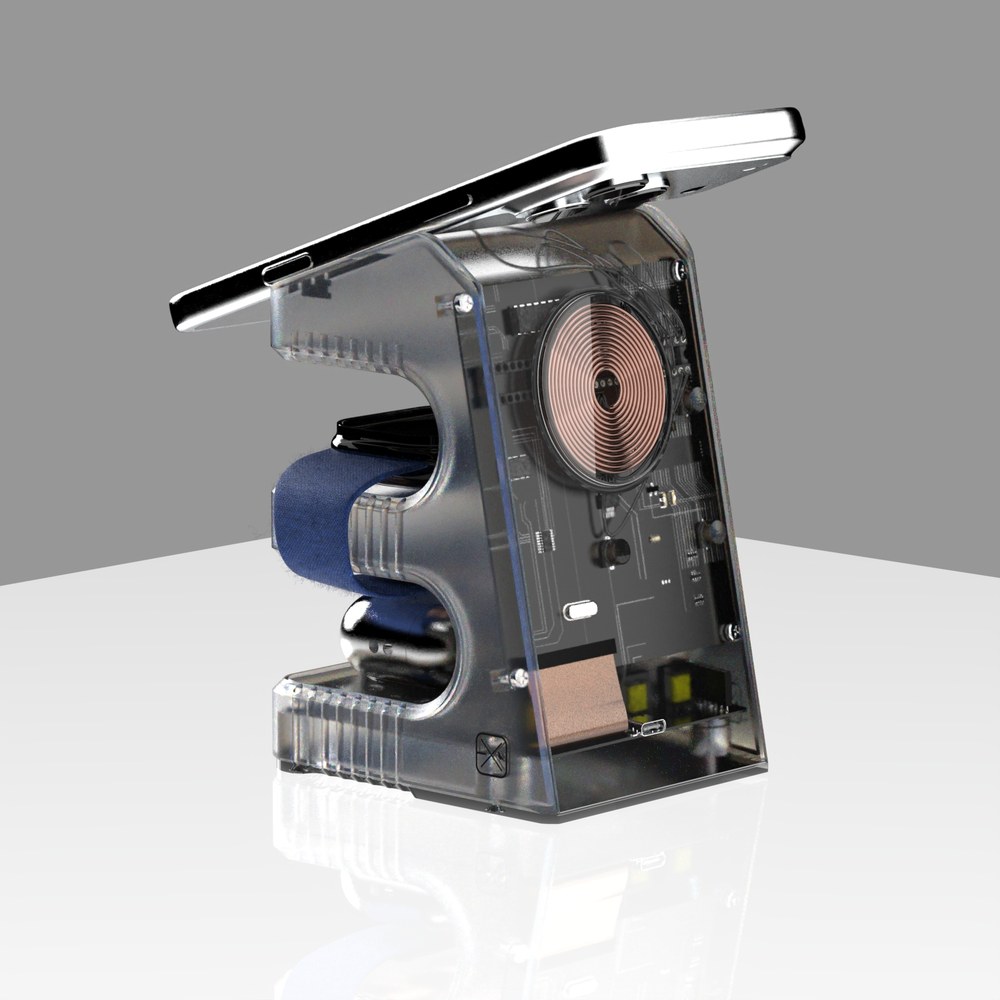
Four colourways, exploded view, x-ray cutaway, compliance label and the thermal work, published on Contra.
02 — Pricing
Fixed scope, fixed timeline, fixed price. You know what it costs before you write to me.
For a board that needs a form and a direction before anything else.
For a product going to a manufacturer, where the housing has to actually work.
For quoting and producing. The package a manufacturer can price from.
03 — See the work before you buy it
Sanitised versions of documents I actually send clients, using Focus Dock as the worked example. Read them and judge the work before you spend anything.
How a project gets broken into phases, what each one costs, and what the total looks like before anyone commits.
Download PDFWhat a design for manufacturing review actually says: wall thickness, draft, tolerancing, part count, and what to change before tooling.
Download PDF04 — Scope
The second list is the more useful one. It is why the first list is reliable.
05 — Who you work with

I help startups and hardware companies turn working electronics into manufacturable products. My work covers enclosure design, product architecture, mechanical integration and hardware concept development, across consumer electronics, battery systems, IoT devices and outdoor equipment. Your engineers keep the board. I make sure what goes around it can actually be produced.
Industrial Design · MBA · MSc Project Management · Tucumán, Argentina
These reviews say almost nothing about enclosures, and that is deliberate. The case study argues the technical side. These answer a different question: whether you will hear back.
“Eugene was amazing to work with, quick to respond and a great listener. He went above and beyond on this project. Highly recommend, would 100% hire him again!”Susan DriedgerQuality Suze LLC · Upwork
“Eugenio is without question the most experienced, skilled as well as dependable designer I have ever worked with.”Barry GriffinAzimuth · Contra
“Working with Eugenio was a very positive experience. Def recommend him. Thanks.”JulianOutdoor audio recorder · Upwork
100% Job Success on Upwork · 13 completed projects · 10+ years as an industrial designer
06 — FAQ
I do. There is no studio behind this and nothing is outsourced. You work with the person doing the CAD, which is why the scope boundaries above are drawn honestly rather than sold as capabilities.
Ideally the board is frozen before the enclosure is built, because a change to the board changes the housing. If it is not frozen, Concept Architecture is still useful, and the later stages are re-quoted if the board moves.
The board or its mechanical drawing, the components that have to fit, your production volume and process if you know it, and a target timeline. The delivery clock starts when I have that and your files, not at purchase.
I take it to the point where a manufacturer can quote and build, and I stay involved through that conversation. What I do not do is engineer the tooling, for the reasons above.
Each package includes a named number of revision rounds. Beyond that, revisions are $150 and a genuinely different form factor direction is $400. Scope changes are quoted before they happen, never absorbed and billed later.
◆ Taking projects
Send a photo of the prototype. Thirty minutes, and you will leave knowing what it costs to turn it into a product and how long that takes, whether or not you hire me.
Paid consultations are $75 for 30 minutes and $150 for 60 minutes, credited against a package if you go ahead. EUGENIO CRUZ CORNEJO